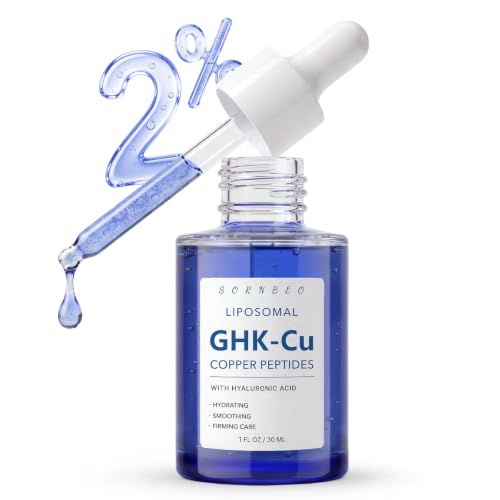
Search long enough and you will find GHK-Cu described as antifibrotic. The claim traces back to real published work, and the most substantial piece of it is a 2024 paper in Redox Biology about silicosis, an incurable occupational lung disease. It is a good study. It is also, in almost every respect that matters to someone holding a serum bottle, about something else entirely.
This article covers GHK-Cu as a cosmetic ingredient. It is not medical advice, and nothing here has been evaluated by the FDA.
Key Takeaways
- In an experimental mouse model of silicosis, GHK-Cu attenuated lung inflammation and fibrosis [1].
- The paper identifies peroxiredoxin 6 as the molecular target and shows GHK-Cu binding to it [1]. Naming a binding partner is a stronger mechanistic claim than gene expression correlation.
- The proposed route runs through alveolar macrophages: less silica-induced oxidative stress in those cells, and less downstream inflammation and fibrosis [1].
- The authors report no significant systemic toxicity in the treated mice [1]. That is an observation in mice, not a human safety finding.
- There is no skin, no topical arm and no human in this study. Lung fibrosis after silica exposure is not the same process as a scar on skin.
What Silicosis Is, and Why Anyone Looked
Silicosis is the most common pneumoconiosis, occurring at high rates in workers with long-term exposure to crystalline silica, and there is no specific medication for it [1]. That last fact is why researchers screen widely for candidates: the therapeutic gap is real and any credible mechanism is worth testing.
GHK entered that search on the strength of its antioxidant properties and its status as a tripeptide that occurs naturally in human blood and urine [1]. That is the same starting point as most of the research on this molecule [2], applied to a lung problem rather than a skin one.
What the Study Did
The group established an experimental silicosis mouse model and observed the effects of GHK-Cu on lung inflammation and fibrosis [1]. Alongside the animal work they used the RAW264.7 macrophage cell line to examine effects on alveolar macrophages, the immune cells that sit in the airspaces of the lung and take the first hit from inhaled particles.
The mechanistic finding is the part that makes this a notable paper. They identified peroxiredoxin 6 as the molecular target and showed that GHK-Cu binds to it, and they link that binding to the attenuation of lung inflammation and fibrosis in the mice, with no significant systemic toxicity reported [1]. The proposed chain runs from inhibiting silica-induced oxidative stress in alveolar macrophages, through reduced pulmonary inflammation, to slowed fibrosis.

Why the Mechanism Is Better Than Most of This Literature
A large share of the GHK-Cu evidence base is expression data: apply the peptide, sequence what happens, report that a great many genes moved [2]. That work is genuinely interesting and it is also the weakest common form of mechanistic argument, because a compound that shifts hundreds of genes has not been shown to act through any particular one.
Identifying a specific protein that the molecule binds is a different class of claim. It is falsifiable, it predicts what should happen if you remove or block that protein, and it gives other groups something concrete to reproduce. Peroxiredoxin 6 is an antioxidant enzyme, so the target also fits the redox story rather than sitting awkwardly beside it [1].
This is worth saying clearly because the honest verdict on the paper is that it is good work. The problem is not its quality. The problem is what gets done with it.
The Distance to Anything You Would Buy
The species and the model. Mice with induced silicosis. Compounds that reduce fibrosis in rodent lung models have a long history of not reproducing in human disease, and the fibrosis field in particular is littered with them.
The organ. Lung. The tissue is different, the injury is different, and the cell types driving it are different. Nothing here is a claim about dermal remodelling.
The route. Whatever the exposure was, it reached the lungs of a whole animal. A serum on a face does not, and the delivery limits on topical GHK-Cu remain what they were [3].

The endpoint. Inflammation and fibrosis markers in diseased tissue. Not wrinkles, not firmness, not scar appearance.
What About Skin Scarring?
It is a fair question, because fibrosis is the general word for excess matrix deposition and scars are a form of that. But silica-driven lung fibrosis and a raised scar on skin are different processes, in different tissues, driven by different cell populations, on different timescales. The mechanism identified here runs specifically through alveolar macrophages responding to inhaled crystalline particles [1]. There are no alveolar macrophages in skin and no inhaled silica.
The correct conclusion is narrow. This paper is evidence about GHK-Cu in a mouse model of an occupational lung disease. It is not evidence about scars, and it is not evidence about serums.
The Pattern Worth Recognising
This is the third or fourth time the same shape has appeared in the GHK-Cu literature: a competent study in a non-skin, non-human, non-topical system produces a striking result, and within months the result is circulating as a property of the ingredient in a bottle.
The defence is a habit rather than a fact. When a claim about this peptide reaches you, ask four questions of the underlying study. What species. What tissue. What route. What endpoint. If any of the four is a long way from a serum on a human face, the claim has travelled further than its evidence.

Frequently Asked Questions
Does this mean GHK-Cu is antifibrotic?
In a mouse model of silicosis, treatment attenuated lung inflammation and fibrosis [1]. That is a real finding in one disease, one organ and one species. Antifibrotic as a general property of the molecule is a much larger claim than the study supports, and fibrosis in lung after silica exposure is a different process from a scar on skin.
Can a serum do anything like this?
No. The study treated an internal organ in a whole animal. Nothing about it involves topical application, and the skin-permeability question that applies to topical GHK-Cu [3] is simply not present in this design.
What is peroxiredoxin 6 and why does it matter here?
It is an antioxidant enzyme, and the paper identifies it as the molecular target that GHK-Cu binds [1]. That is a stronger kind of claim than most of the literature on this peptide offers. Much of the GHK-Cu evidence base is gene expression correlation; naming a binding partner is a specific, testable mechanism.
Should I take GHK-Cu for lung health?
There is no human data, no established oral or inhaled dose, and no approved product. The study reports no significant systemic toxicity in its mice [1], which is a statement about those mice at that exposure, not a safety clearance for people.
References
- Bian Y, Deng M, Liu J, et al. The Glycyl-L-Histidyl-L-Lysine-Cu(2+) Tripeptide Complex Attenuates Lung Inflammation and Fibrosis in Silicosis by Targeting Peroxiredoxin 6. Redox Biology (2024). PMID 38879894
- Pickart L, Margolina A. Regenerative and Protective Actions of the GHK-Cu Peptide in the Light of the New Gene Data. International Journal of Molecular Sciences (2018). PMID 29986520 (authors affiliated with Skin Biology, a company that sells copper-peptide products)
- Mortazavi SM, Mohammadi Vadoud SA, Moghimi HR. Topically Applied GHK as an Anti-Wrinkle Peptide: Advantages, Problems and Prospective. BioImpacts (2025). PMID 39963574
These statements have not been evaluated by the FDA. This product is not intended to diagnose, treat, cure, or prevent any disease. This article is for informational purposes only and is not a substitute for professional medical or dermatological advice. As an Amazon Associate we earn from qualifying purchases.
These statements have not been evaluated by the Food and Drug Administration. This information is not intended to diagnose, treat, cure, or prevent any disease. Content is for informational purposes only and is not medical advice; consult a qualified healthcare provider before starting any supplement. As an Amazon Associate we earn from qualifying purchases.