If you have spent any time researching anti-aging serums, you have almost certainly encountered both GHK-Cu and Matrixyl 3000 on ingredient labels or in brand marketing. Both are peptide-based actives positioned around collagen support, and both have accumulated meaningful research attention compared to most cosmetic ingredients. Understanding how they differ — in structure, proposed mechanism, and the strength of supporting evidence — helps cut through the noise.
GHK-Cu is a naturally occurring copper-binding tripeptide (glycyl-L-histidyl-L-lysine complexed with copper II) found in human plasma that declines with age. Matrixyl 3000 is a proprietary blend developed by Sederma, combining two synthetic palmitoyl peptides. Neither is FDA-approved to treat or prevent any skin condition, and both are used exclusively as topical cosmetic ingredients. What follows is an honest, mechanism-focused comparison of what each is proposed to do and where the evidence currently stands.
Key Takeaways
- GHK-Cu is a naturally occurring copper-binding tripeptide proposed to work through broad tissue-repair gene signaling and copper-dependent collagen cross-linking enzyme activity.[3]
- Matrixyl 3000 is a proprietary palmitoyl peptide blend that works primarily through matrikine signaling and targeted anti-inflammatory activity — a different mechanism than GHK-Cu.
- Both have supporting in vitro and small clinical data, but independent large-scale trials are limited for both; neither is FDA-approved to treat any skin condition.
- The two peptides can generally be used together, though formulation pH and product compatibility should be considered when layering actives.
- Look for ‘copper tripeptide-1’ or ‘palmitoyl tripeptide-1 / palmitoyl tetrapeptide-7’ positioned early in the ingredient list as a proxy for meaningful concentration.
What Is GHK-Cu and How Is It Thought to Work?
GHK-Cu stands for glycyl-L-histidyl-L-lysine copper (II), a small tripeptide that binds copper ions and is present naturally in human plasma, saliva, and urine. Plasma concentrations are relatively high in young adults and decline substantially with age — a pattern that researchers have associated with the broader slowdown in tissue maintenance observed in aging skin.[1]
Topically applied GHK-Cu is proposed to act as a biological signal rather than a simple substrate. The peptide-copper complex is thought to enter skin cells and interact with cellular signaling pathways, upregulating the synthesis of collagen types I and III, elastin, and glycosaminoglycans such as hyaluronic acid. Research has also found that GHK-Cu modulates a large number of genes involved in antioxidant defense, wound healing, and inflammation, suggesting a broad rather than narrowly targeted mechanism of action.
Because GHK-Cu incorporates copper, it brings both the proposed signaling benefits of the GHK peptide sequence and the enzyme co-factor role that copper plays in lysyl oxidase, the enzyme responsible for cross-linking collagen and elastin fibers to give them structural strength. This copper involvement is one of the features that distinguishes GHK-Cu mechanistically from palmitoyl peptides like those in Matrixyl 3000.
What Is Matrixyl 3000 and How Is It Different?
Matrixyl 3000 is a trademarked ingredient complex from Sederma that contains two palmitoyl peptides: palmitoyl tripeptide-1 (listed on labels as Pal-GHK or palmitoyl-glycyl-histidyl-lysine) and palmitoyl tetrapeptide-7 (Pal-GQPR). The palmitoyl fatty acid chain attached to each peptide is not decorative — it increases the ingredient’s affinity for the lipid-rich upper layers of skin, improving penetration compared to an unmodified peptide.[2]
Palmitoyl tripeptide-1 shares the same three-amino-acid sequence as GHK-Cu but lacks the copper and instead carries a palmitoyl group. This makes Matrixyl 3000 work through a different route: rather than delivering copper or broadly modulating gene expression, Pal-GHK acts as a matrikine — a fragment that mimics breakdown products of extracellular matrix proteins and signals to fibroblasts that repair is needed. Palmitoyl tetrapeptide-7 (Pal-GQPR) is proposed to downregulate the release of interleukins associated with skin inflammation, which can contribute to collagen degradation over time.
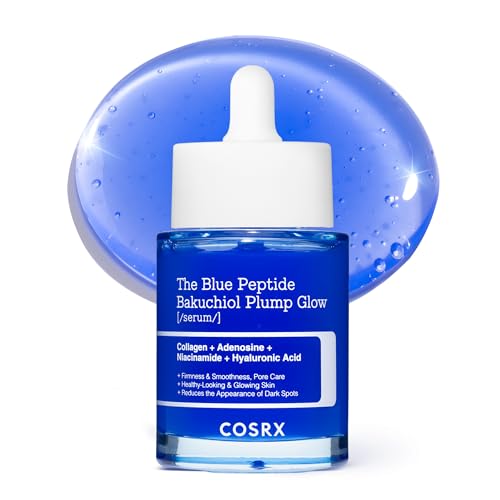

In short, Matrixyl 3000 works primarily through matrikine signaling and targeted anti-inflammatory activity, while GHK-Cu is proposed to work through a broader tissue-repair signaling mechanism that also involves copper-dependent enzymatic processes.
Comparing the Evidence: What Research Actually Shows
It is important to be straightforward here: most published research on both ingredients consists of in vitro (cell culture) studies, ex vivo skin models, and relatively small clinical trials funded by or conducted in collaboration with ingredient suppliers. These study types are useful for understanding mechanisms, but they cannot confirm with certainty that a topical product produces meaningful visible change in a given individual.
GHK-Cu has a longer research history, partly because the GHK peptide was identified and studied decades before cosmetic peptides became a commercial focus. Laboratory studies have consistently found upregulation of collagen, elastin, and glycosaminoglycan production in fibroblast cultures treated with GHK-Cu. Gene expression research has mapped a remarkably large number of genes that the complex appears to influence, though how much of this translates to clinical skin outcomes through a cosmetic formulation remains uncertain.
Matrixyl 3000 is backed by Sederma’s proprietary clinical data, including studies measuring skin firmness, wrinkle depth, and roughness in small panels of participants over several weeks. The results have been cited extensively in the cosmetics industry. Independent replication of these studies is limited, which is a relevant limitation when evaluating marketing claims. Both peptides are, however, recognized by the Cosmetic Ingredient Review as safe in the present practices of use and concentration in cosmetics. That conclusion was reached for the use levels the Panel recorded, typically under 10 ppm (about 0.001%), which is well below the strengths marketed on serum labels.
Skin Concerns: Which Peptide Is Better Suited for What?
GHK-Cu is often discussed in the context of wound healing support, skin thinning that accompanies age, and visible loss of firmness. Because it is proposed to work broadly on tissue repair signaling and collagen cross-linking enzyme activity, proponents suggest it may be particularly relevant for skin that has experienced significant structural decline. It is also frequently formulated into products targeting hair thinning, given parallel research into scalp and follicle applications, though this article focuses on facial skin use.
Matrixyl 3000 is frequently positioned as an ingredient for fine lines and early-to-moderate wrinkle depth, particularly where the goal is to signal increased collagen production through a matrikine pathway while also moderating low-level inflammatory activity. The dual-peptide design — one peptide for matrix signaling, one for inflammation — gives it a somewhat different profile than GHK-Cu. It is also considered stable and straightforward to formulate, making it common in a wide range of over-the-counter serums.
Neither peptide is meaningfully superior for every use case. If the primary concern is supporting broader tissue repair signaling and the skin tolerates copper well, GHK-Cu may be the more interesting option. If the primary concern is fine-line appearance and access to a well-studied, widely-formulated ingredient, Matrixyl 3000 has a longer commercial track record with published supporting data.

Can You Use GHK-Cu and Matrixyl 3000 Together?
There is no established evidence of antagonism between GHK-Cu and Matrixyl 3000 when used together, and their proposed mechanisms operate through different pathways — copper-mediated tissue repair signaling on one side, matrikine and anti-inflammatory signaling on the other. Some formulators and skincare enthusiasts layer both or seek products that combine them on this basis.
One practical consideration is pH. GHK-Cu is most stable in formulations with a pH in the range of approximately 6 to 7. Many active serums, particularly those containing vitamin C or AHAs, are formulated at lower pH values that can destabilize copper peptides or potentially compete for skin interactions. If you are combining multiple actives, the order of application and the formulation pH of each product matter more than the theoretical ingredient interaction.
If using both in separate products, a common approach is to apply the GHK-Cu product at a time when skin pH is closer to neutral — for example, after cleansing and before a low-pH active — or to alternate products between routines. Neither ingredient requires special handling beyond the standard guidance of patch-testing new actives and introducing them gradually.
Formulation Quality and What to Look for on Labels
With both GHK-Cu and Matrixyl 3000, the quality and concentration of the formulation matter significantly. INCI names to look for include ‘copper tripeptide-1’ for GHK-Cu and ‘palmitoyl tripeptide-1’ plus ‘palmitoyl tetrapeptide-7’ for Matrixyl 3000. Ingredient placement near the end of a long ingredient list, particularly after preservatives, suggests a very low concentration that may not achieve the levels studied in research.
GHK-Cu can oxidize when exposed to light and air, and some users find that high-concentration copper peptide products cause mild temporary skin sensitivity, particularly if strong exfoliants are used in the same routine. Matrixyl 3000 is generally considered easy to tolerate across most skin types. Both are available in a wide range of price points, and higher price does not reliably predict higher efficacy — what matters is ingredient concentration, formulation stability, and product pH.
🛒 Where to Buy GHK-Cu (Copper Peptide)
- NIOD Copper Amino Isolate Serum 2:1 (CAIS 2:1)Lab-tested / studied
liquid, 1-2 drops applied topically PM; can use AM for accelerated protocols — Flagship high-concentration copper peptide serum from DECIEM; proprietary copper complex delivery at elevated percentage; best-in-class premium benchmark - The Ordinary Buffet + Copper Peptides 1%
liquid, 2-3 drops applied topically AM or PM after cleansing — Most accessible entry point; combines multi-technology peptide base with 1% copper tripeptide-1; ideal for first-time copper peptide users; widely available - Cosmetic Skin Solutions Copper Peptide Serum 2%
liquid, 2-3 drops applied to clean skin AM or PM — 2% copper peptide concentration at accessible price; strong Amazon reviews for post-procedure skin recovery; direct lab-to-consumer model keeps costs low - Skin Actives Scientific Copper Peptide Serum
liquid, 3-4 drops applied to face and neck AM or PM — Lab-direct brand with high-purity actives at competitive prices; transparent ingredient sourcing; popular with the DIY skincare and science-forward skincare community
As an Amazon Associate we earn from qualifying purchases. GHK-Cu quality depends on packaging and disclosure more than price. Choose an airless pump or sealed dropper rather than an open-top jar, and prefer a brand that states the actual peptide percentage on the label.

A Note on the Evidence
Most research on both GHK-Cu and Matrixyl 3000 comes from in vitro studies and small industry-associated clinical trials, so the extent of real-world clinical benefit from topical use remains uncertain. Neither ingredient is a medical treatment, and individuals with skin conditions, copper sensitivities, or compromised skin barriers should consult a dermatologist before adding new actives to their routine.
Frequently Asked Questions
Is GHK-Cu the same thing as the peptide in Matrixyl 3000?
They share the GHK amino acid sequence but are structurally different ingredients. GHK-Cu is glycyl-L-histidyl-L-lysine complexed with copper II. Palmitoyl tripeptide-1, one component of Matrixyl 3000, is the same three-amino-acid sequence but modified with a palmitoyl fatty acid chain and without copper. This structural difference produces different proposed mechanisms of action.
Can copper peptides like GHK-Cu be used with retinol?
Many formulators and practitioners advise against combining GHK-Cu and retinol in the same application step, as retinol is used at lower pH values and there is a theoretical concern that the two may interact unfavorably in terms of formulation stability. A common approach is to use one in the morning routine and the other at night, or to apply them at different steps with a waiting period. This is a formulation compatibility question, not a safety issue.
Which peptide is better for deep wrinkles?
There is no head-to-head clinical evidence comparing GHK-Cu and Matrixyl 3000 on deep wrinkle depth. Both are proposed to support collagen production, but neither topical cosmetic peptide has been shown in large independent trials to produce dramatic reversal of established deep wrinkles. Expectations should be calibrated: these are supportive ingredients, not equivalent to prescription retinoids or in-office procedures for significant structural change.
Is Matrixyl 3000 suitable for sensitive skin?
Palmitoyl tripeptide-1 and palmitoyl tetrapeptide-7 are generally considered well-tolerated and are frequently used in formulations designed for sensitive skin. The anti-inflammatory component of Matrixyl 3000 (Pal-GQPR) is actually proposed to help reduce skin sensitivity signals. As with any active ingredient, a patch test before full-face use is advisable.
Does GHK-Cu have any research on wound healing or skin repair?
GHK-Cu has been studied in laboratory settings in the context of wound healing, largely because the GHK peptide was first identified in the context of liver regeneration and tissue repair research. In vitro studies have found effects on fibroblast activity, collagen synthesis, and antioxidant gene expression. However, no topical GHK-Cu cosmetic product is approved to treat wounds or repair damaged tissue; this use falls outside cosmetic regulatory categories.
What concentration of GHK-Cu or Matrixyl 3000 is effective?
Sederma’s published data on Matrixyl 3000 typically references usage concentrations in the range of 3 to 5 percent of the blend in a finished formulation, though exact figures vary by source. For GHK-Cu, studies have used a range of concentrations; cosmetic products generally use between 1 and 5 percent. Because cosmetics do not require disclosure of exact ingredient concentrations, checking ingredient list placement and contacting manufacturers directly are the most practical approaches for consumers.
References
- The potential of GHK as an anti-aging peptide. Aging Pathobiology and Therapeutics (2020). PMID 35083444
- Topically applied GHK as an anti-wrinkle peptide: Advantages, problems and prospective. BioImpacts (2025). PMID 39963574
- The human tri-peptide GHK and tissue remodeling. Journal of Biomaterials Science, Polymer Edition (2008). PMID 18644225 (authors affiliated with Skin Biology, a company that sells copper-peptide products)
These statements have not been evaluated by the Food and Drug Administration. This information is not intended to diagnose, treat, cure, or prevent any disease. Content is for informational purposes only and is not medical advice; consult a qualified healthcare provider before starting any supplement. As an Amazon Associate we earn from qualifying purchases.
