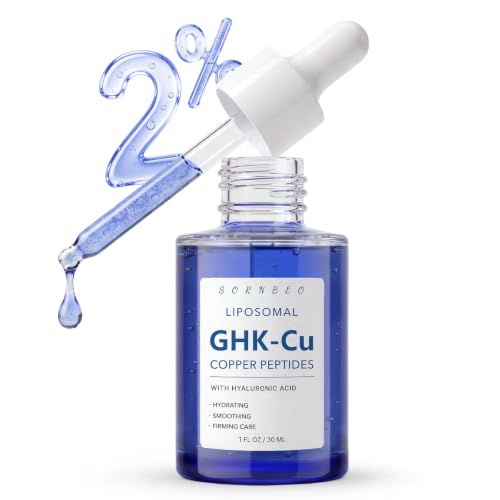
- Some users describe a temporary flare of redness, peeling, or bumps they call the “copper uglies”; a patch test catches most reactions before full use
- In skin-cell tests GHK-Cu showed low irritation potential next to plain copper salts[1], but clinical studies of GHK-Cu skincare are surprisingly scarce[2]
- Peptides are unstable in formulas[2], so the intact GHK-Cu in a bottle can fall short of its label
- The FDA flags compounded injectable GHK-Cu for possible immunogenicity from aggregation and peptide-related impurities[3]
GHK-Cu, the copper peptide marketed heavily in anti-aging skincare, has a mostly favorable safety reputation for topical use. User complaints cluster around two patterns: skin looking worse before it looks better, and doubts about what is actually in the bottle.
The “Copper Uglies”: A Nickname, Not a Diagnosis
Some users describe redness, peeling, or small bumps in their first weeks with a copper peptide product, and online skincare communities call this the “copper uglies.” The usual explanation is that the skin is adjusting, but we found no clinical study that has measured or named this reaction. Irritation that lasts, spreads, or itches badly is more likely a reaction to the product than an adjustment phase. Testing a small patch of skin for a few days before full use is the simplest way to find out.

Irritation, Redness, and Rashes
Users applying copper peptides report itching, redness, and rashes in some cases (see our guide to side effects). In a keratinocyte study, GHK-Cu was not cytotoxic and did not raise skin-irritation biomarkers, while copper chloride and copper acetate did[1]. That is a cell-culture result, not a human patch test. A 2025 review of topical GHK noted a surprising absence of clinical studies of GHK-Cu in anti-wrinkle products[2], so no trial yet shows how often users react. Acids, retinoids, or fragrance in the same formula can also cause irritation that gets blamed on the peptide.
Product Quality: The Complaint Behind the Complaints
Some negative reviews are less about the peptide than about the product. Peptides are hydrophilic and unstable, which makes them hard to formulate[2]. A bottle stored too long or kept warm may hold less intact peptide than its label states, which could explain why one bottle seems to work and the next does not. A product that has changed colour or smell is a reason to stop using it.
Injectable Use Carries Real, Different Risks
The risks change when GHK-Cu is injected rather than applied to the skin. The FDA lists GHK-Cu for injectable routes among bulk drug substances that may present significant safety risks in compounding. It says compounded injectables containing GHK-Cu may pose a risk of immunogenicity because of aggregation and peptide-related impurities, and that human safety data are limited[3]. Self-injection also carries the usual infection risk from needles and non-sterile preparation, so injected GHK-Cu belongs under a clinician’s care.
Copper and Wilson Disease
Because GHK-Cu contains copper, some users worry about copper overload. The amount in a topical serum is small, but one group needs more care: people with Wilson disease, whose bodies cannot clear copper properly. NIDDK advises them to talk with their doctor before using dietary supplements, since some contain copper[4]. The same caution makes sense for copper peptide products, especially oral or injected forms.
FAQ
What are the “copper uglies”?
A nickname from online skincare communities for temporary redness, peeling, or bumps when starting GHK-Cu. It has not been studied clinically, so irritation that persists should be treated as a possible reaction to the product.

Is GHK-Cu safe to inject?
The FDA flags compounded injectable GHK-Cu for possible immunogenicity from aggregation and peptide-related impurities, and notes limited human safety data[3]. It should not be self-injected without medical supervision.
Why do GHK-Cu product reviews vary so much?
Formulas differ in concentration and in their other active ingredients, and peptides are unstable in formulation[2], so two products sold as GHK-Cu can behave differently on the same skin.
References
- Li H, Toh PZ, Tan JY, et al. Selected Biomarkers Revealed Potential Skin Toxicity Caused by Certain Copper Compounds. Sci Rep (2016). PMID 27892491
- Mortazavi SM, Mohammadi Vadoud SA, Moghimi HR. Topically applied GHK as an anti-wrinkle peptide: Advantages, problems and prospective. Bioimpacts (2025). PMID 39963574
- U.S. Food and Drug Administration. Certain Bulk Drug Substances for Use in Compounding that May Present Significant Safety Risks. fda.gov
- National Institute of Diabetes and Digestive and Kidney Diseases. Eating, Diet, & Nutrition for Wilson Disease. niddk.nih.gov
These statements have not been evaluated by the Food and Drug Administration. This information is not intended to diagnose, treat, cure, or prevent any disease. Content is for informational purposes only and is not medical advice; consult a qualified healthcare provider before starting any supplement. As an Amazon Associate we earn from qualifying purchases.